Saved commodity-positioning test · Before automation
67.89% down: test your trading rules before automating them
Your automated trading strategy needs a test before its rules become code. Our saved weekly commodity-positioning test fell 67.89% from a previous peak. At a chosen $10,000 peak, that is $6,789 down, beside an example $1,000 total loss limit. Before building a bot for a challenge, keep the reference value, reset time and open trades beside the rule you want it to follow.
The belief: one percentage settles the question
If a report says maximum drawdown, you might compare that percentage directly with your challenge allowance. Both describe a loss, so they look interchangeable. But a loss from a previous high and a loss from the initial account value answer different questions. A daily rule adds another reference point and a reset time.
A request to automate an existing trading strategy raises a useful first question: what has the rule already survived? Before choosing the code, write down what each account condition measures. A consistency rule can restrict the share of profit earned on one day. A total loss rule protects an account floor. A daily loss rule applies within its own named day. One winning or losing percentage cannot settle all three.
What the saved test did
The rule used a weekly US positioning report for gold, silver and two oil markets. It compared the reported positions of money managers with those of producers. Each week it bought the two highest-ranked markets and sold the two lowest-ranked markets, with equal weights. Trading began after the report was available. The saved run included the costs of closing and reopening all four positions.
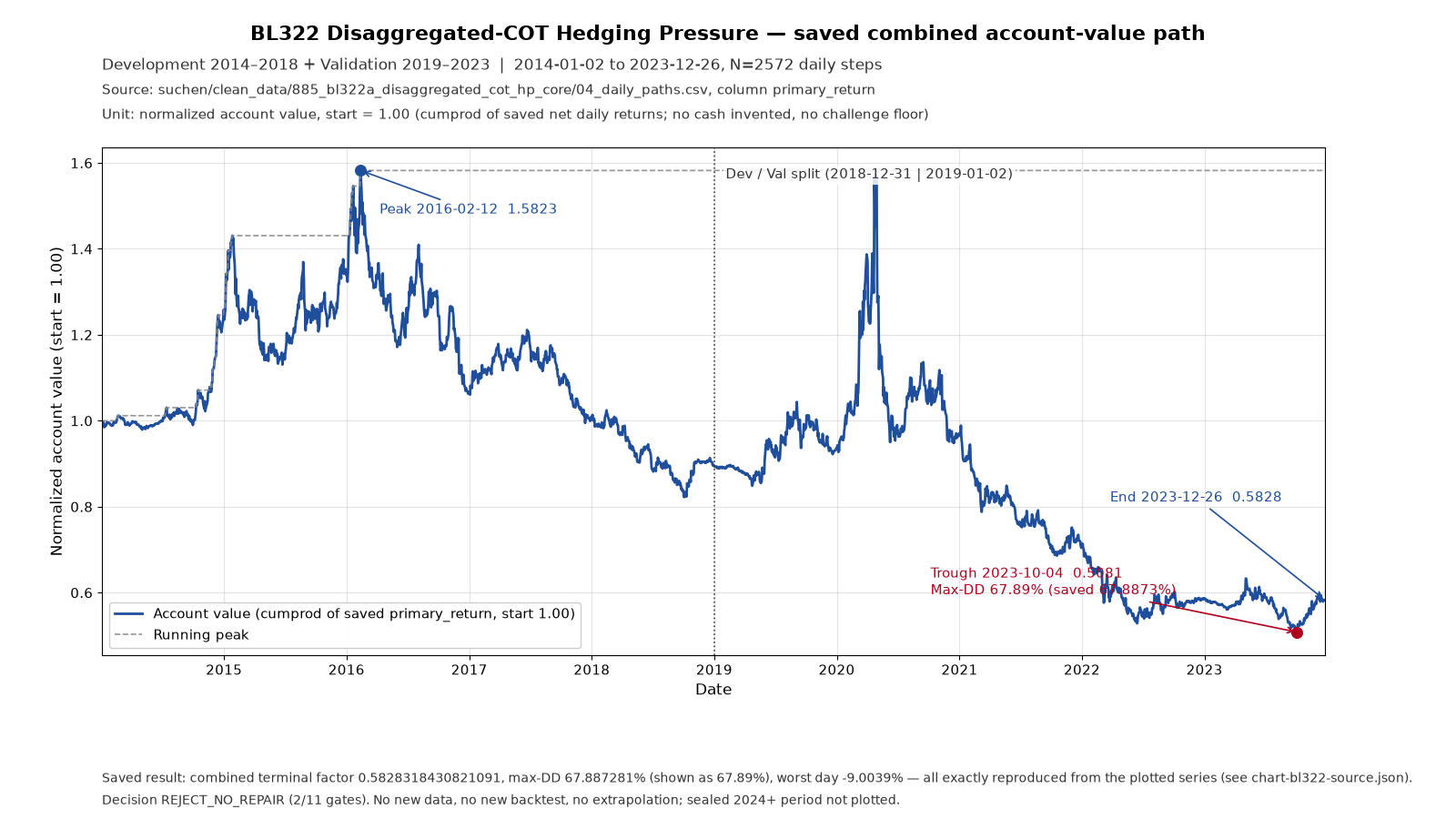
The test covered 2014 through 2023. The first part covered 2014-2018 and the second covered 2019-2023. The combined report recorded a 67.89% maximum fall from a previous account high. The rule was rejected before a live bot was built for it. More code would have made the losing rule run automatically; it would not have repaired the saved result.
The chart shows the daily account values saved by that historical run. It helps locate a losing stretch. Its units and dates stay attached to the chart so you can see exactly what was measured. Daily values leave the account's path between those values unanswered.
What to settle before the bot is built
First, name the reference value. Does the total loss rule start from the original balance, a previous high, or another value stated by the firm? Put that value in money beside the allowed loss. The $6,789 example above assumes a $10,000 previous peak. The example $1,000 allowance assumes a 10% limit on a $10,000 starting account. They are separate assumptions, even though the dollar bases happen to match.
Second, name what is checked. Closed balance leaves out the current result of open trades. Account value including those trades can fall while the closed balance stays still. Keep fees and overnight charges in the value specified by the rule. Our balance and open-equity case shows why those two lines can disagree.
Third, write the reset time beside the daily rule. A new date on the chart does not establish that the firm's day has changed. The saved reset-clock case shows how changing only the chosen clock moved the permitted floor at the same instant.
Fourth, check the recorded times. If the rule checks losses during open trades, a daily closing chart leaves a gap. Ask for the values throughout the losing stretch. Mark any missing interval as unknown rather than treating it as a safe interval.
Finally, keep other conditions separate. Profit targets, minimum trading days and holding restrictions need their own checks against the firm's current written rules. A favourable return figure does not answer those questions for you.
Your next step
Put your exact account rules into the free Challenge Pre-Check. Keep one losing stretch from your own report beside them. The useful first result is a list of the values and times you need to compare.
This was a rejected historical simulation with daily sampling; the dollar comparison uses chosen reference values and does not replay a funded challenge account.
Sources and related guides
Start with your own rules
Keep your exact rules beside one losing stretch and identify the missing values and times.
Free Challenge Pre-Check →